The Silent Reason People Over 55 Keep Losing Muscle — No Matter How Much They Exercise
It's not your workout. It's not your willpower. Science now points to one overlooked biological shift that quietly dismantles muscle mass after midlife — and most doctors never mention it.

If you're over 55 and feel like your body is quietly working against you — muscles that feel softer, energy that fades faster, strength that takes longer to come back after exercise — you are not imagining it.
And no, it's not simply "getting older."
There's a specific biological mechanism behind it. One that begins silently in your 40s, accelerates in your 50s, and by your 60s and 70s has already cost most people 30% or more of their peak muscle mass.
The medical term is sarcopenia — and researchers now consider it one of the primary drivers of fatigue, weakness, and loss of independence in older adults. What makes it particularly frustrating is this: you can be exercising regularly and still be losing muscle if the underlying problem isn't addressed.
The reason is rooted in how your body processes protein as you age. After 55, something changes in the way your cells absorb and utilize the amino acids from the food you eat. Your muscles stop getting the full signal to rebuild and grow — even when protein intake looks adequate on paper.
This is why so many people in their 60s and 70s feel like they're putting in the work at the gym but not seeing — or feeling — the results they once did.
Dr. Frank Shallenberger, one of America's leading anti-aging physicians with over 44 years of practice, has spent years studying this exact problem. His clinical findings point to a clear conclusion:
It's whether your body can actually use it."
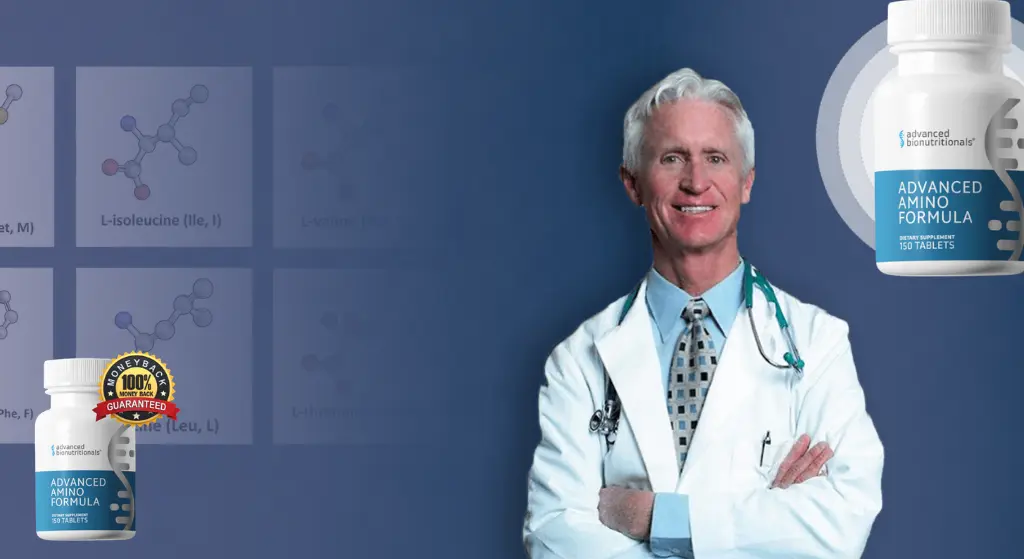
In his research and clinical work, Dr. Shallenberger identified that all eight essential amino acids — in precise ratios — are required to trigger the muscle-building response in aging bodies. Miss even one, or have it out of balance, and the signal breaks down. Your body simply cannot build new muscle tissue, no matter how hard you train or how much protein you consume.
What he discovered next changed how he treated his patients — and the results were, by his own account, beyond what he expected.
Free video — no signup required
His patients — men and women in their 60s, 70s, and even 80s — began reporting results that went far beyond muscle. More energy. Better stamina. Tighter skin. Stronger nails. A physical resilience they hadn't felt in decades.
I have more muscle than I've had in 20 years. I'm happy with my weight and I'm so toned and trim.
— Ronda C.
I am 82 years old. Within one week, I was able to increase my bench press by 20 pounds.
— Alvin T., 82
I am a 67-year-old female but look like I'm in my 40s.
— Theresa F., 67
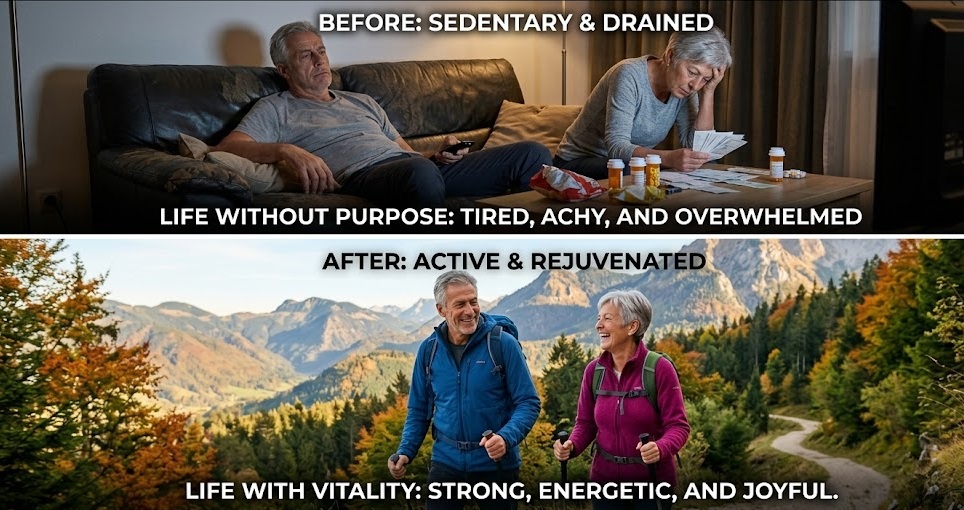
These aren't outliers. They're the kind of results that happen when the body finally gets what it's been missing — the right building blocks, in the right form, at the right ratios.
The science behind this is well-documented. Studies published in peer-reviewed journals including Advances in Therapy and cited on PubMed show that targeted amino acid supplementation can measurably support muscle synthesis, energy production, and physical performance in adults over 50 — in as little as 30 days.
If you're over 55 and feel like your body isn't responding the way it used to — to exercise, to rest, to everything you're doing right — this discovery is worth 10 minutes of your time.
Dr. Shallenberger explains exactly what's happening and what to do about it
* These statements have not been evaluated by the Food and Drug Administration. This product is not intended to diagnose, treat, cure, or prevent any disease. Individual results may vary.